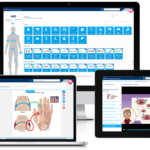
Health IT developers are working on EHR documentation tools to decrease pediatrician burden and enhance patient care.
Clinical documentation in pediatric care has changed dramatically since EHRs became more prevalent, leading to pediatrician burden, according to a study published in the Journal of the American Academy of Pediatrics.
Clinical EHR documentation was initially designed to record clinical information as provider notes in real-time during a consultation, assessment, imaging, or treatment, ultimately to share patient information among health providers.
While the transition from paper to EHR documentation has allowed for more accessible and legible notes, it is a primary cause of clinician burden due to information overload and larger amounts of text that is not always relevant to patient care.
Want to publish your own articles on DistilINFO Publications?
Send us an email, we will get in touch with you.
EHR documentation tools force or send alerts to the clinician about required or forced fields. These interventions can result in clinician burden by increasing the length and decreasing the effectiveness of the notes, while also increasing the occurrence of inaccurate documentation.
And at the same time, the ever-changing tide of EHR documentation best practices in pediatrics has proven exhausting for clinicians, likewise contributing to feelings of burnout.
Researchers aimed to review changes in EHR documentation and promote the development of best practices for EHR documentation for pediatric patients, along with highlighting alternative documentation techniques and newer technologies.
Foremost, this begins with better data.
“Similar to other medical specialties, the documentation needs of pediatric providers include both discrete (conforming to a predefined or conventional syntactic organization) and nondiscrete documentation needs as well as the need for some flexibility between the two,” wrote the study authors.
“The value of discrete data includes relatively easy use and reuse for clinical decision support, quality measurement, research, or reporting to regulatory agencies.”
However, the authors said the need for discrete data, such as vital signs, screening tests, growth parameters, and immunizations, can negatively impact clinical notes and may increase clinician burden. As a result, an EHR tool to streamline documentation and data entry could create barcoding for vaccine administration and reduce burden.
A second issue of clinical documentation is information overload. If a clinician can access a patient’s notes across her lifetime, regardless of clinical benefits, it makes it difficult on the clinician to retrieve key information. Functionalities that feature a hierarchal display of notes and data can help mitigate overload, wrote the authors.
“Whenever possible, usability and information design should be an essential part of the EHR certification process,” the study authors wrote. “There should be a focus on graphical visualization of numerical data. Custom development of patient summaries for various provider types and care settings requires effort but can be valuable.”
From a pediatrics point of view, pediatricians have a unique relationship with school systems. There is an important need for child healthcare providers to have a solid line of communication with school systems. However, parents are typically the messenger between the two organizations and this creates a challenge to effectively communicate or exchange documents.
“Communication between schools and health care providers could be facilitated by the streamlining and standardization of documentation essential for this process for schools and child care centers across the country,” explained the authors.
“In addition, efforts should be made to enable sharing of this information electronically with parents and the school system and direct communication between health care and education providers.”
Along with school systems, child healthcare providers may also document adolescent mental health, reproductive health, and substance abuse, and share this information with other providers. The authors noted most EHR systems are unable to filter confidential clinical data, such as protecting it from parents through a patient portal. EHR settings should account for various state laws regarding confidentiality, wrote the authors.
In an effort to improve patient care and reduce clinical burden, EHR documentation methods have evolved.
Hospitals are increasingly integrating speech recognition tools into EHR systems to enhance clinical efficiency, improve EHR usability, and limit burden. But increased research is needed to analyze error rates and documentation time.
An EHR scribe tool is another recently developed documentation tool aimed at alleviating burden and reducing the use of a human scribe. However, a recent study showed the importance of a human scribe and developers are facing issues that make it tough to completely abolish the use of a human scribe.
Finally, EHR documentation strategies should leverage the patient as a team member.
EHR documentation can encompass care coordination and communication between providers and patients. As a result, new technology, such as patient portals, allow for patients to view and sometimes edit clinical documentation.
“In pediatrics, clinical care teams also include adolescents who may have the right to manage their own reproductive health, substance use, and mental health issues and the school systems that serve as important caregivers for pediatric patients,” wrote the study authors.
While EHR documentation has its positives, it also carries extreme burden for pediatricians.
“Strategies to meet these multiple, often competing needs have shifted from replicating paper documentation to exploring different models that may better suit these requirements and achieve maximum value for pediatric providers and for the care of children,” concluded the study authors.
“Examples include shared documentation and medication management. Documentation improvement is a multidisciplinary venture that should include input from clinical, research, regulatory, and education stakeholders.”
Source: EHR Intelligence